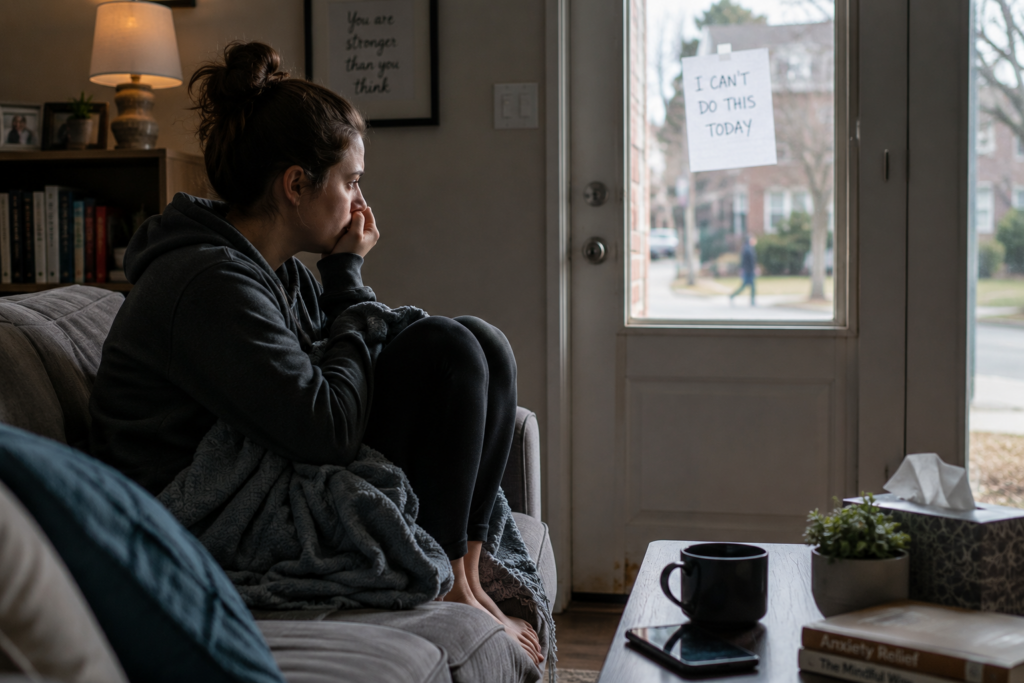
Anxiety and depression are different conditions, but they frequently occur together. Anxiety is typically associated with excessive worry, fear, nervousness, and a sense that something bad might happen. Depression is more commonly associated with sadness, hopelessness, low motivation, and a loss of interest or pleasure. Although either condition can occur on its own, living with persistent anxiety can sometimes contribute to the development of depression.
Living with anxiety day after day can be physically and emotionally exhausting. Constant worrying, anticipating the worst, struggling with uncomfortable physical sensations, and repeatedly trying to calm yourself can take a toll. Over time, a person may begin to feel worn down and discouraged. When anxiety continues for weeks, months, or even years, frustration can turn into hopelessness. Instead of simply thinking, “I hate feeling anxious,” a person may begin thinking, “I’m never going to feel like myself again,” or “Things are never going to get better.” This sense of hopelessness is an important symptom of depression.
Depression can affect much more than a person’s mood. Someone who is depressed may lose interest in activities they once enjoyed, have difficulty getting motivated, withdraw from friends and family, or stop looking forward to things. Everyday responsibilities may begin to feel overwhelming. Concentrating and making decisions can become more difficult, and a person may feel unusually tired even when they haven’t been particularly active. Depression can also affect sleep and appetite, causing some people to sleep or eat considerably more or less than usual.
Depression can also change the way people think about themselves and their lives. They may become more self-critical, feel guilty or worthless, or focus primarily on what is wrong rather than what is going well. Accomplishments that once brought satisfaction may no longer feel meaningful. Some people describe depression as sadness, while others experience it more as emptiness, numbness, irritability, or simply not caring about things the way they once did. When depression becomes severe, a person may even have thoughts about death or suicide, which should always be taken seriously.
Fortunately, both anxiety and depression are treatable. Cognitive behavioral therapy (CBT), behavioral activation, exercise, increased social connection, lifestyle changes, and medication can all be helpful depending on the individual. Treatment for depression often involves gradually reversing the withdrawal and inactivity that help keep depression going, while also addressing the anxious thinking and avoidance that may have contributed to it. A person doesn’t necessarily have to wait until they feel motivated to begin making changes. Taking small steps toward activities, relationships, and experiences that once provided enjoyment, purpose, or accomplishment can be an important part of feeling better.