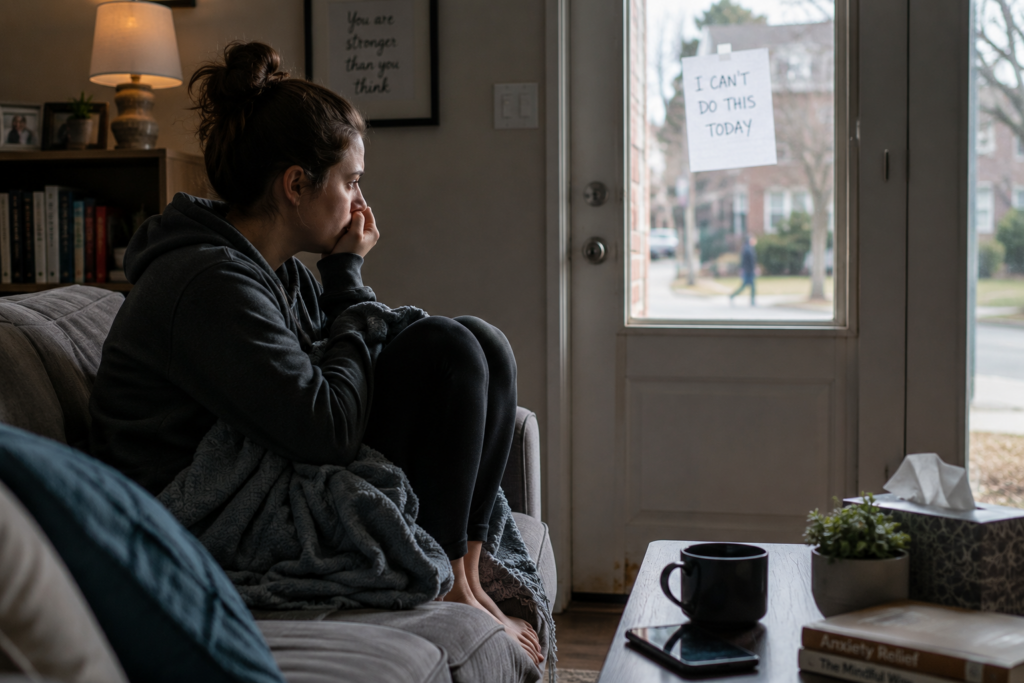
Many people are reluctant to try medication and would prefer to overcome anxiety on their own. I understand this, and in many cases, I support it. Cognitive Behavioral Therapy (CBT), exposure therapy, and self-help strategies can be remarkably effective.
But sometimes anxiety is so severe that therapy alone is not enough. In these cases, medication isn’t a sign of weakness, it’s an important tool that can help people recover and reclaim their lives. Ironically, for many anxiety sufferers, medication is both the object of fear and the solution to fear.
Medication Fears
Some people avoid medication because they believe they should be able to conquer anxiety through sheer willpower. More often, however, their reluctance is driven by fear:
- What if the medication makes me feel worse?
- What if I become addicted?
- What if it changes my personality?
- What if I gain weight?
- What if I feel foggy or “not myself”?
- What if I experience terrible side effects?
These are understandable questions. But have you considered asking yourself these questions instead?
- What if medication eases my suffering?
- What if I’m depriving myself of something that could help?
- What if I experience few or no side effects?
- What if medication gives me the boost I need to do the difficult work of recovery?
- What if this is exactly what I need to get my life back?
The Two Main Types of Medications Used for Anxiety
Anti-Anxiety Medications (Benzodiazepines)
Medications such as Xanax, Ativan, Klonopin, and Valium can reduce anxiety quickly. They are often prescribed for panic attacks, severe anxiety, or specific situations such as flying.
When used appropriately and under the supervision of a physician, these medications can be very helpful. Some people rarely take them but feel reassured simply knowing they have them available. The medication becomes a safety net that gives them the confidence to face feared situations.
However, benzodiazepines can lead to physical dependence if used regularly for long periods, which is why they should be used thoughtfully and monitored by an experienced physician.
Antidepressants
Despite the name, antidepressants are among the most commonly prescribed medications for anxiety disorders.
Unlike benzodiazepines, they are taken daily and generally take several weeks before their benefits become noticeable. Many people gradually notice they worry less, experience fewer physical symptoms of anxiety, and feel calmer overall.
Most importantly, medication often makes it easier to participate fully in CBT and exposure therapy. When anxiety is less overwhelming, people are better able to face their fears rather than avoid them.
Many patients ask me:
“Will antidepressants change my personality?”
The answer is no. Street drugs can alter personality and judgment. Antidepressants are designed to reduce excessive anxiety and depression—not change who you are. Most people tell me they feel more like themselves, not less.
When Medication May Be Essential
There are times when therapy alone simply isn’t enough. Medication should be seriously considered if:
- Your anxiety is so severe that you are eating poorly, sleeping poorly, or struggling to function in daily life.
- Your anxiety is so intense that you cannot consistently do exposure exercises or therapy homework.
- You have participated in CBT, practiced the strategies faithfully for months, and are making little progress.
If any of these apply to you, you may be suffering unnecessarily. Consulting a psychiatrist doesn’t mean you’ve failed. It means you’re exploring another path toward healing.
Be Careful About Researching Side Effects
Many people scare themselves away from medication by spending hours reading online forums and exhaustive lists of side effects. Remember this:
Do not confuse possibility with probability.
Every possible side effect must be listed for legal reasons, even those that occur very rarely.
If you begin a medication and notice physical symptoms, keep in mind that anxiety itself can create symptoms. Increased awareness of your body, fear of the medication, and anticipatory anxiety can produce nausea, dizziness, stomach upset, headaches, or feelings of unreality.
Many of my patients experience few or no side effects. Others have mild side effects that diminish after a week or two as their bodies adjust. This is why it is often wise to start with a low dose and increase slowly under your doctor’s supervision.
If a medication causes intolerable side effects, stop taking it, and the side-effects will go away. There are many alternatives to try.
Finding the Right Medication Can Take Time
Sometimes the first medication works beautifully. Sometimes it doesn’t. Some people need to try different medications, different doses, or occasionally a combination of medications before finding the right fit. This process can be frustrating and discouraging, but it is often worth the effort. And if antidepressants are not a good fit for you, there are other options your psychiatrist may consider, including other classes of medications or supplements.
The important thing is this:
Do not give up hope.
Medication is only one piece of recovery. CBT, exposure therapy, lifestyle changes, and persistence remain powerful tools for overcoming anxiety.
Medication Is Like Training Wheels
I often tell my patients to think of medication as the training wheels on a bicycle and therapy as the pedaling.
A child learning to ride a bike may need training wheels at first. Without them, they may fall repeatedly, become frightened, and give up.
But training wheels alone don’t teach a child to ride. The child still has to pedal.
Medication can reduce anxiety and provide stability, but therapy is what teaches you how to challenge fearful thoughts, stop avoiding, and face your fears.
You need both.
And eventually, when your confidence grows and your symptoms have been minimal for a sustained period, you may be able to slowly remove the training wheels and continue riding on your own.
One Patient’s Experience
One of my former patients who struggled with emetophobia told me:
“I was terrified to try medication. I was convinced it would make me sick, especially after reading about side effects online. Looking back, that research only fueled my fears.
Eventually, I realized I was suffering too much to keep going the way I was. I took a leap of faith and met with a psychiatrist.
At first, I worried that every sensation was a side effect. In reality, much of what I was experiencing was anxiety about taking the medication. After a few weeks, things changed dramatically. I slept better. My appetite returned. Most importantly, I was finally able to use the tools I was learning in therapy.
The medication didn’t do the work for me. But it made the work possible.”
Final Thoughts
Whether medication helps you get on an airplane, sleep through the night, stop having panic attacks, or simply lower your overall level of anxiety, it is worth considering.
You don’t receive extra credit for suffering. If medication can help you heal, allow yourself to explore that possibility with an open mind.
Sometimes courage isn’t refusing help. Sometimes courage is accepting it.