Phobias are far more common than most people realize. In fact, there are hundreds of recognized phobias, many with names that are almost as intimidating as the fears themselves. For example, arachnophobia is the fear of spiders, while acrophobia is the fear of heights. Don’t confuse acrophobia with aerophobia, the fear of flying, or astraphobia, the fear of thunder and lightning. And these are only a few examples beginning with the letter A. Search online and you’ll find phobias covering nearly every letter of the alphabet.
But what exactly is a phobia?
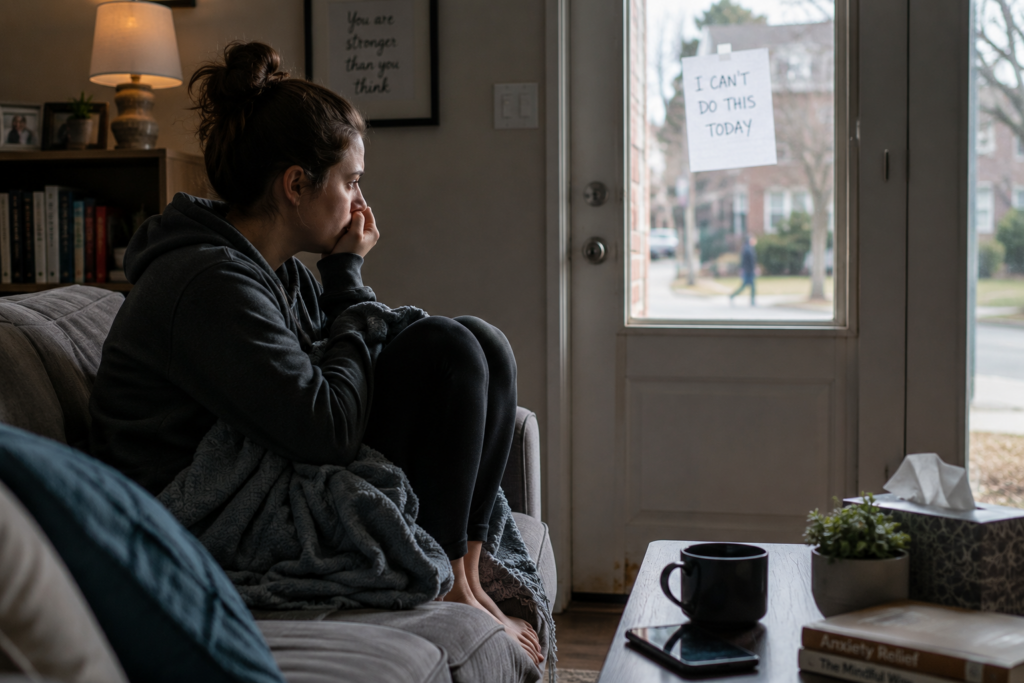
A phobia is an intense and persistent fear of a specific object, activity, or situation. It is much more than simply disliking something. Most people may feel uncomfortable around snakes, heights, or public speaking, but people with phobias experience overwhelming anxiety that can interfere with everyday life.
The fear often shows up in three ways:
- Anticipatory anxiety: Worrying long before the feared event occurs.
- Intense anxiety during exposure: Feeling extreme fear when confronting the object or situation.
- Avoidance: Going to great lengths to escape or prevent exposure to the fear.
Most people with phobias recognize that their fears are exaggerated or irrational. Yet knowing this doesn’t make the anxiety disappear. The emotional brain often overrides logic, producing a powerful fear response even when there is little or no actual danger.
When confronted with the feared situation, a person may experience symptoms such as:
- Racing heart
- Shortness of breath
- Sweating
- Trembling
- Dizziness
- Nausea
- Feelings of panic or losing control
People with phobias also experience anxiety from simply anticipating the feared event. Someone with a fear of their blood pressure being taken, for example, may lose sleep for days before a doctor’s appointment while person with a fear of bridges might struggle a week before a driving trip.
How Phobias Restrict Our Lives
Many people are able to work around their phobias with relatively little disruption. Someone with a fear of elevators may take the stairs. A person afraid of clowns can simply avoid the circus. A person with a fear of public speaking may choose a career that requires no presenting. And a person with a fear of spiders will leave the room quickly and have their spouse kill the spider.
But not all phobias affect people in the same way. While some remain relatively mild and only become a problem when a person encounters the feared object or situation, other phobias can have a profound impact on daily life. Imagine having a fear of spiders and constantly scanning every room you enter, checking corners, ceilings, and closets for signs of them. Even when no spiders are present, your mind remains on high alert, always preparing for the possibility.
Emetophobia, the fear of vomiting, is often even more intrusive. For many sufferers, the fear is ever-present. They may worry about what they eat, avoid restaurants, stay away from people who appear ill, and closely monitor every sensation in their stomach. The fear doesn’t wait for a specific situation to arise, it can dominate a person’s thoughts, influence countless decisions, and significantly limit their quality of life.
Avoidance
The fastest way to reduce or prevent anxiety is avoidance but this comes at a price.
Every time we avoid what we fear, we unintentionally teach our brain that the feared situation is dangerous and that avoidance is necessary for safety. The temporary relief feels good, but over time the fear grows stronger and spreads to more situations. Eventually, a phobia can begin to shape a person’s life.
This happened to actress Whoopi Goldberg, who suffered from a severe fear of flying. For years she refused to board airplanes and instead traveled by bus, even across the country. Her life had to be organized around avoiding her fear.
This illustrates an important principle: Avoidance strengthens anxiety. Facing fears weakens it.
What Causes Phobias?
While avoidance creates phobias researchers believe that they begin from a combination of life experiences, genetics, and temperament. Sometimes a frightening event creates a powerful association. A child who is bitten by a dog may later develop a fear of dogs. Someone who survives a terrifying storm may become fearful whenever severe weather approaches.
Psychologist Ivan Pavlov’s work on classical conditioning helps explain this process: when an object or situation becomes associated with fear, the fear can persist long after the original danger has passed.
Phobias tend to run in families. Genetics may play a role, but children also learn by observing the fears and reactions of parents and other family members.
Some phobias begin with a scary thought. My son suddenly became afraid to go parks when he was in fourth grade. A seed was planted in his mind when there was an announcement at school not to get into a stranger’s van. One day at our neighborhood park he saw a van and then he saw a police car. He suddenly panicked and ran to our car. He refused to go to our park for at least a year.
Treatment for Phobias
The good news is that phobias are highly treatable.
One of the most effective treatments is Cognitive Behavioral Therapy (CBT), particularly a form of treatment called Exposure Therapy or Systematic Desensitization. This approach helps people gradually face their fears in a safe, controlled way while learning new coping skills and discovering that they can tolerate anxiety without avoiding it.
Relaxation training can help manage physical symptoms of anxiety, and many people also find therapies such as EMDR and Hypnosis to be valuable components of treatment.
With the right approach, people can overcome fears they once believed they would have forever.
A Small Sample of Phobias
- Acrophobia – Fear of heights
- Agliophobia – Fear of pain
- Bibliophobia – Fear of books
- Claustrophobia – Fear of confined spaces
- Coulrophobia – Fear of clowns
- Entomophobia – Fear of insects
- Glossophobia – Fear of public speaking
- Hemophobia – Fear of blood
- Musophobia – Fear of mice
- Ophidiophobia – Fear of snakes
- Pedophobia – Fear of children
- Phobophobia – Fear of phobias
- Ranidaphobia – Fear of frogs
- Technophobia – Fear of technology
- Venustraphobia – Fear of beautiful women
And remember: no matter how unusual a fear may seem, if it causes significant anxiety or limits your life, help is available and recovery is possible.