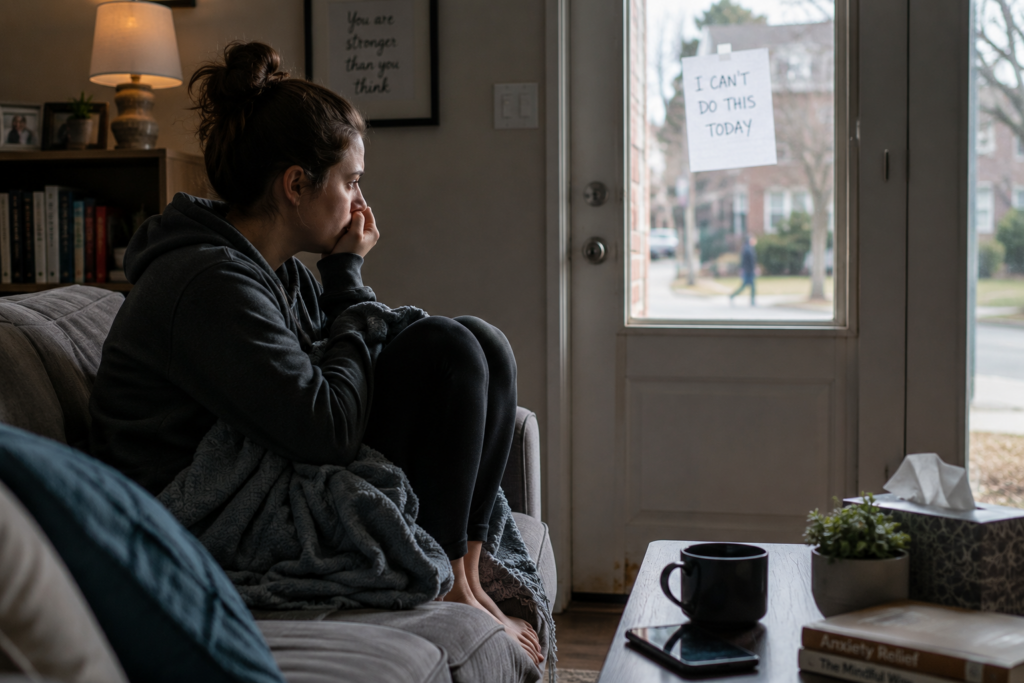
When you’re anxious, your mind and body can feel as though they are constantly on high alert. Your thoughts may race, your muscles may tighten, and your attention can become fixated on uncomfortable symptoms or frightening possibilities. Guided meditation is a powerful tool that can help interrupt this cycle and teach your nervous system how to shift into a calmer state.
Unlike silent meditation, guided meditation allows you to listen to a voice that leads you through a specific relaxation experience. Instead of trying to figure out how to relax or struggling to quiet your thoughts, you simply listen and follow the instructions. Listening to a calming voice gives your mind something specific to focus on, while breathing, visualization, and muscle relaxation helps reduce your physical arousal.
There are several types of guided meditation that can be particularly helpful for anxiety.
Guided imagery uses visualization to create a sense of calm and safety. You may be asked to imagine yourself walking along a peaceful beach, sitting beside a quiet lake, or resting in another relaxing environment. The more vividly you imagine the sights, sounds, smells, and sensations, the more absorbed you can become in the experience. Guided imagery helps redirect attention away from anxious thoughts and toward calming mental images.
Autogenic relaxation focuses on creating sensations of warmth, heaviness, and calm throughout the body. You may hear phrases such as, “My arms feel heavy and relaxed” or “My breathing is calm and steady.” By repeatedly focusing on these physical sensations, you learn to influence your body’s relaxation response and reduce the physical tension associated with anxiety.
Progressive muscle relaxation involves systematically tightening and relaxing different muscle groups throughout the body. You might begin with your hands, shoulders, or face and gradually move through the rest of your body. This technique helps you recognize the difference between tension and relaxation. Many anxious people carry muscle tension without even realizing it. Progressive muscle relaxation teaches you how to notice that tension and let it go.
Guided meditation can be especially helpful when you’re anxious and worried. Begin listening as soon as possible. Be patient if you are experiencing a panic attack. It will take longer for your symptoms to subside. You don’t have to stop your thoughts or force yourself to feel calm. Your only job is to listen and follow along. Be patient. Each time your mind drifts off bring it back to your breathing and what you are hearing.
Guided meditation is not something to use only when you feel anxious. Its greatest benefit often comes from regular practice.
Think of relaxation as a skill. If you only practice when you’re extremely anxious, you’re trying to learn the skill at the most difficult possible time. Listening to a guided meditation every day gives your mind and body repeated opportunities to practice slowing down. Over time, the relaxation response can become more familiar and easier to access.
You may not feel dramatically different after every meditation, and that’s okay. The goal is not to judge each session or measure how relaxed you became. The goal is consistency. Ten or fifteen minutes of daily practice can help you become more aware of tension, more comfortable with slowing down, better at redirecting your attention, and better able to use these skills when anxiety appears.
Don’t wait until you’re anxious to practice relaxation. Train your mind and body when you’re calm, so the skill is there when you need it most.
On this website I offer two guided meditation downloads. Stress Free contains six different relaxation exercises ranging from seven minutes to fifteen minutes. Sleeping in My Lounge Chair is forty minutes and designed to help you fall asleep. On the home page menu click on Self-Help.