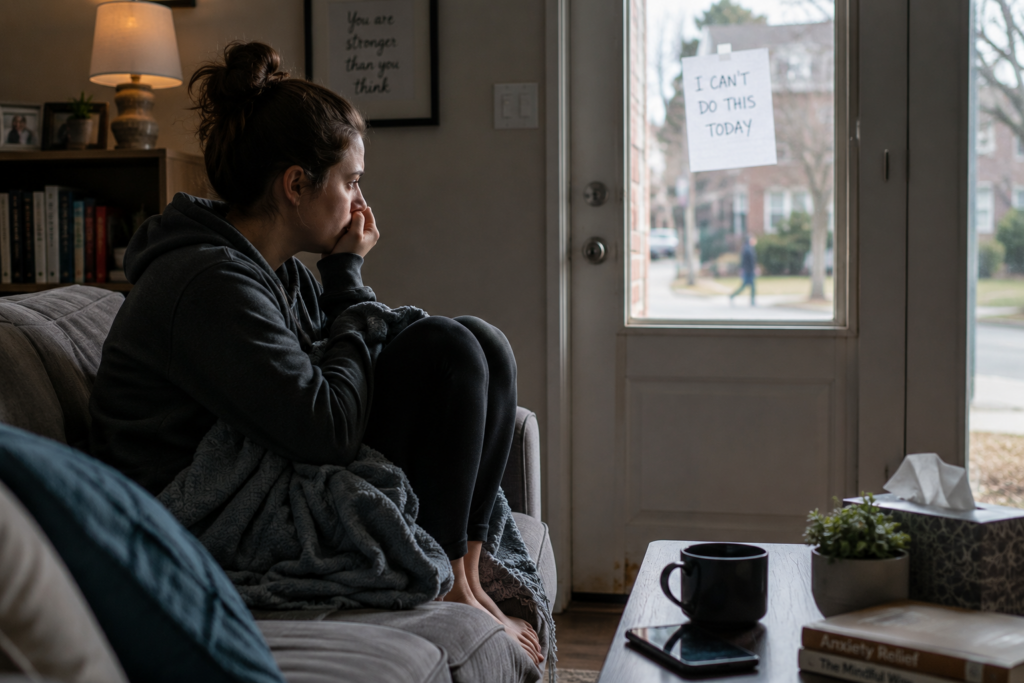
When Every Symptom Feels Like a Serious Disease
Everyone notices changes in their body from time to time. A headache, muscle twitch, strange sensation, skin discoloration, a brief episode of dizziness. Most people notice a symptom, think little of it, and move on with their day. People with health anxiety do not.
A headache may trigger fears of a brain tumor. A muscle twitch may become a neurological disease. Skin discoloration may be interpreted as skin cancer. A racing heart may be viewed as evidence of a serious cardiac condition.
The symptom is real. The fear is real. But the conclusion is often incorrect.
Health anxiety occurs when a person becomes excessively preoccupied with the possibility of having or developing a serious illness. They spend large amounts of time monitoring their body, checking their symptoms, seeking reassurance, researching diseases, and trying to determine whether a physical sensation is dangerous. Over time, health concerns begin to dominate their thoughts and interfere with their ability to enjoy life.
The Health Anxiety Cycle
Health anxiety often follows a predictable pattern. A person notices a symptom. An alarming thought appears: “What is this? What if it’s something serious?” There’s a surge of adrenaline and an urgency to find out what’s happening, immediately. They search for answers online which often leads to learning about fatal diseases. This fuels their anxiety more. They check their symptom repeatedly and ask loved ones for reassurance. They schedule a doctor’s appointment and feel relief when they receive a clean bill of health.
Then a new symptom appears or a new doubt emerges. “What if the doctor missed something?” “What if the test was wrong?” “What if it’s too early to detect?” And the cycle starts all over again.
In addition to physical symptoms, health anxiety sufferers can also be triggered by a social media post about a terminal illness, news of a celebrity recently diagnosed with a fatal disease, or a conversation about someone who is dying. It’s not uncommon to hear about the symptoms of someone who died of a fatal disease and then wake up the next morning with those symptoms. Then it’s off to the doctor for reassurance, despite feeling anxiety that comes with every visit.
Doctor’s Visits
For many with health anxiety, visiting the doctor is one of the most anxiety-provoking experiences they face. They are terrified of hearing bad news, being referred to a specialist, or being told they need a medical test. Even before the appointment begins, their mind is often flooded with catastrophic thoughts: “What if they find something serious?” “What if this symptom is the first sign of a life-threatening disease?” “What if my life is about to change forever?”
For many people with health anxiety, the worry begins long before the appointment and often continues long afterward. Days or even weeks before seeing the doctor, they may find themselves imagining worst-case scenarios: being referred to a specialist who refers them for several medical tests and then concludes they have a fatal illness. After the appointment, the anxiety often shifts to waiting for test results with the same scary outcome.
While many can walk away from a doctor’s visit feeling reassured and happy that they don’t have a fatal disease, sometimes the doctor can’t provide a hundred percent certainty. Even the tiniest amount of uncertainty can trigger a huge amount of fear.
“I don’t think you have anything to worry about it but we’ll have to wait and see.”
Even a positive or reassuring statement can be interpreted as evidence that something is seriously wrong. For example, a doctor might say, “I don’t see any signs of cancer, but I’d like to see you again in six months for a routine follow-up.”
When most people hear reassurance, the person with health anxiety hears uncertainty.
“If I don’t have cancer, why do I need to come back in six months?”
“There must be something wrong and he doesn’t want to worry me.”
“His exam was not thorough, and he was in a hurry. What if he missed something?”
The anxious mind has a remarkable ability to transform reassuring information into a new source of worry. This is one reason why doctor visits, tests, and reassurance often provide only temporary relief. Before long, a new doubt appears, a new symptom is noticed, or a new question demands an answer, and the cycle begins again.
Over time, the doctor’s office itself can become a powerful trigger for anxiety. The waiting room, the smell of disinfectant, the blood pressure cuff, the examination table, and even seeing people in scrubs can activate fear. After years of anxiety-filled appointments, medical tests, and worries about serious illnesses, the medical setting becomes associated with danger. As a result, many people begin feeling high anxiety the moment they pull into the parking lot.
For some, the fear becomes so intense they avoid medical care altogether. Even when there are legitimate symptoms that should be evaluated, they delay making appointments because they are terrified of hearing bad news. In their mind, not knowing feels safer than knowing.
Others respond in the opposite way. They visit doctors frequently, request repeated tests, and seek constant reassurance that they are healthy. Hearing, “Everything looks fine,” brings a tremendous sense of relief. The problem is that the relief doesn’t last. A new symptom appears, a new doubt emerges, or the mind begins questioning the doctor’s conclusion. “What if they missed something?” “What if it’s too early to detect?” “Should I get a second opinion?”
The anxiety returns, and the urge for reassurance returns with it.
A vicious cycle develops. The person begins relying on doctor visits, medical tests, and reassurance to reduce their anxiety. While these behaviors provide temporary comfort, they unintentionally strengthen the belief that reassurance is necessary to feel safe. Over time, the person becomes increasingly dependent on outside reassurance rather than learning to tolerate uncertainty about their health.
What Causes Health Anxiety and Can It Be Cured?
Like all anxiety disorders, health anxiety is influenced by both genetics and life experiences. Some with health anxiety grew up with a parent with health anxiety who unintentionally taught them to be afraid. Others can trace their fears back to a significant life event, such as:
- A serious illness
- A frightening medical experience
- The death of a loved one
- Having a family member with a serious disease
- Physical or sexual abuse
- Repeated exposure to illness-related stories in the media
- Becoming a parent and being responsible for another life
The internet, the 24/7 news cycle, and social media have also contributed to rising levels of health anxiety. Never before have people had such easy access to medical information which can be confusing and lead to more questions than answers. And social media algorithms push stories about fatal diseases making it seem like they are more common than they really are.
I could go on and on about health anxiety and how to overcome it. In fact, I did. I wrote The Health Anxiety Handbook and Video Toolkit, a comprehensive guide to understanding and overcoming this condition.
In the book, I explain why health anxiety develops, how it takes over your life, and most importantly, how to break free from it. You’ll learn how to stop monitoring and checking every sensation, stop treating every symptom as evidence of catastrophe, and stop seeking reassurance that never seems to last.
Most importantly, you’ll learn how to stop worrying and start living.
The good news is that health anxiety is highly treatable. With the right tools, guidance, and willingness to face your fears, recovery is possible. Working with a therapist who specializes in anxiety and OCD can help you learn the skills needed to overcome health anxiety and reclaim your life.