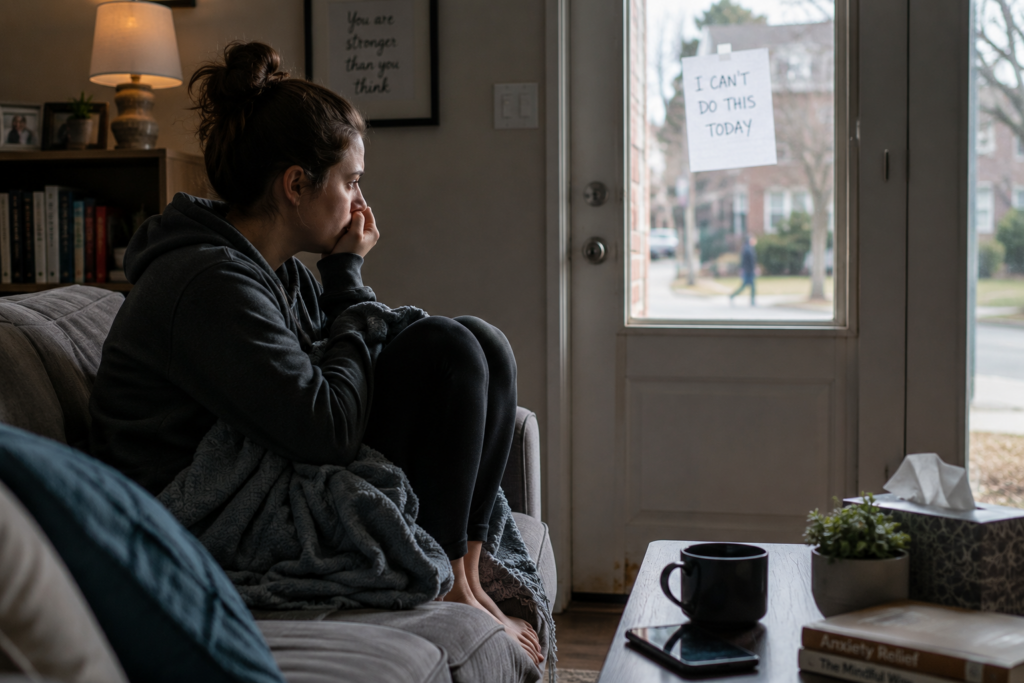
How many times have you driven somewhere and arrived with little memory of the trip? Or eaten an entire bag of chips while watching television and barely tasted a single bite? Or spent time with your spouse, children, or friends while your mind was somewhere else entirely, worrying about tomorrow, replaying yesterday, or running through an endless to-do list?
If you’re like most people, this happens all the time.
From the moment we wake up, we are in motion. We get the kids ready for school, rush off to work, answer emails, run errands, pay bills, make dinner, and try to squeeze in a little time for ourselves. Even when we’re not doing something, we’re thinking about the next thing we need to do. We live much of our lives on autopilot.
Mindfulness is the antidote.
And the good news is that it doesn’t require an hour of meditation, sitting cross-legged on the floor, or escaping to a mountaintop retreat. It can begin in the next five minutes.
What Is Mindfulness?
Mindfulness is the practice of paying attention to the present moment with openness, curiosity, and without judgment.
It means noticing your thoughts, feelings, bodily sensations, and the world around you exactly as they are, without trying to change them, fight them, or label them as good or bad.
Many of us spend our lives in what psychologists call “doing mode.”
In doing mode, our minds are constantly solving problems:
- What do I need to get done today?
- What if something goes wrong?
- Did I say the wrong thing yesterday?
- What should I make for dinner?
- How will I ever get everything done?
The mind is always racing ahead or looking behind.
Mindfulness invites us into “experiencing mode.” Experiencing mode is where we pay attention to what is happening right now.
The warmth of a cup of coffee.
The feeling of the sun on your face.
The sound of birds outside your window.
The rhythm of your breathing.
For a few moments, you stop living in your head and start living in your life.
Mindful Eating: The Cookie Exercise
Here’s a simple way to experience mindfulness. Imagine you have a chocolate chip cookie in front of you. Don’t eat it yet. Look at it carefully. Notice its shape and color. Smell it. Is it buttery? Sweet? Chocolatey?
Now take a small bite. Slow down. Really taste it. Notice the texture. Is it soft or crunchy? Warm or cool? Sweet or salty?
Most of us inhale food while doing three other things at once. Mindful eating is different. You’re not judging the cookie or rushing through it. You’re simply experiencing it. And for that brief moment, your mind is exactly where your body is. That is mindfulness.
The Five-Minute Mindfulness Break
You don’t need special equipment or a meditation cushion. Simply pause for five minutes and ask yourself:
What am I feeling right now?
Am I anxious? Excited? Frustrated? Calm?
What sensations do I notice in my body?
Am I tense? Hungry? Tired? Comfortable?
What thoughts are passing through my mind?
Here’s the important part:
You don’t have to stop the thoughts. You don’t have to change them. You don’t even have to like them. Just notice them.
Imagine your thoughts are clouds drifting across the sky.
You don’t chase them. You don’t wrestle with them. You simply watch them come and go. This is mindfulness.
Mindful Breathing
One of the simplest mindfulness practices is focusing on your breath.
Take a slow breath in through your nose.
Allow your stomach to rise.
Then slowly exhale.
As you breathe, silently think to yourself:
“Breathe… and relax.”
Again:
“Breathe… and relax.”
When your mind wanders, and it will, gently bring your attention back to your breath. Not with frustration. Not with criticism. Just gently return. Over and over. This isn’t failure. This is the practice.
Mindfulness Through Your Senses
At any moment, you can ground yourself in the present by using your senses. Ask yourself: What do I see? What do I hear? What do I smell? What sensations do I feel in my body? What do I taste?
The goal isn’t to evaluate these experiences. It’s simply to notice them. Think to yourself, “I’m noticing…
…smell of rain.
…the softness of a blanket.
…the hum of an air conditioner.
…the taste of coffee.
…the coolness of the evening air.
Life is full of small moments that we often miss because we’re too busy worrying about the next one.
Mindfulness and Anxiety
People often tell me:
“I can’t practice mindfulness because my mind won’t stop racing.”
But mindfulness is not about having a blank mind. It’s not about eliminating anxiety. It’s about changing your relationship with your thoughts. Instead of fighting anxious thoughts, you learn to observe them. Instead of trying to make anxiety disappear, you make room for it. Ironically, when you stop fighting your thoughts and feelings, they often become less overwhelming.
The Benefits of Mindfulness
Research has shown that mindfulness can:
- Reduce stress and anxiety
- Improve mood
- Lower blood pressure
- Improve concentration
- Enhance emotional regulation
- Reduce impulsive behavior
- Improve relationships
- Increase self-compassion
- Help people cope with chronic pain and illness
But perhaps the greatest benefit is this:
Mindfulness helps you fully participate in your own life. Instead of rushing through moments, you begin to experience them. Instead of fighting reality, you learn to accept it. Instead of always asking, “What if?” you begin asking: “What is happening right now?” And then notice without judgement.
The Qualities of Mindfulness
Mindfulness is not a destination. It’s a way of relating to yourself and to life.
It involves:
- Being present instead of lost in the future.
- Being curious instead of judgmental.
- Accepting reality instead of fighting it.
- Letting thoughts come and go without clinging to them.
- Treating yourself with kindness and compassion.
- Recognizing that life is constantly changing.
Most importantly, mindfulness means showing up for your life exactly as it is.
Practice Mindfulness
You don’t have to meditate for an hour a day to become more mindful. You can practice while drinking coffee. Petting your dog. Taking a shower. Washing dishes. Driving to work. Or sitting quietly for one minute and simply noticing your breath.
If you practice once a day, you will become skilled at mindfulness, which can then become one of your most powerful coping tools when life gets tough:
When you can’t sleep and your mind keeps racing.
When you’re worried about an upcoming event and your imagination is predicting disaster.
When you’re stuck in traffic and your anxiety begins to rise.
When you’re waiting for medical test results and your mind is consumed with “what if” thoughts.
When you have a panic attack and are afraid of the sensations in your body.
When you’re overwhelmed by sadness, anger, or disappointment.
At these moments, mindfulness doesn’t make your uncomfortable thoughts or feelings disappear. Instead, it teaches you to make room for them without fighting them. You learn to observe your thoughts rather than believe every one of them. You learn to experience anxiety without immediately trying to escape it.
And something remarkable happens: the less you struggle with your thoughts and feelings, the less power they have over you.
Mindfulness isn’t about having a peaceful life. It’s about learning to find peace within yourself, even when life isn’t peaceful.
Mindfulness is not about escaping your life. It’s about being fully present for it.
And sometimes, just a few moments of paying attention, to your breath, your body, or the world around you, can remind you that peace isn’t something you have to find. It’s something you can practice. Right here. Right now.